 更新至4集
更新至4集

-
[清空]播放记录
[清空]播放记录
当我们生活的年代可以通过“你说,他/她说,我说,“来给一个人下有罪判决书,当我们生活的年代可以否决那些背叛普世价值观的人应有的权利时,当我们在舆论大浪里随波逐流,兴奋地口沫横飞声讨所有“不道德”时,请记住,你手里这把锋利又危险的利刃,在今天是你杀死他人的武器,也可以在明天成为他人毁灭你的工具。
Mia Farrow是14个孩子的母亲,这其中4个是自己生的,10个是领养的。以下是几位被Mia领养仍在世的孩子对他们的童年的回忆。
Soon Yi,Woody Allen的现任妻子,这样回忆她的童年:
"When Soon-Yi was a girl, she says, Farrow asked her to make a tape about her origins, detailing how she’d been the daughter of a prostitute who beat her. The request puzzled her, Soon-Yi says, since she had no memory of anything like that, so she refused.
From then on, things got worse, in Soon-Yi’s telling, though a family spokesperson refuted all her memories of physical abuse, neglect, or showing favoritism to one child over another.
Soon-Yi remembers, for instance, the first bath that Farrow gave her, in a Korean hotel room, as traumatic. “I’d never taken a bath by myself, because in the orphanage it was a big tub and we all got in it. Here, it was for a single person, and I was scared to get in the water by myself. So instead of doing what you would do with an infant — you know, maybe get into the water, put some toys in, put your arm in to show that you’re fine, it’s not dangerous — she just kind of threw me in.
Despite the pastoral tranquillity, Soon-Yi says, she felt achingly unhappy, a state of affairs that was not helped by Mia’s and André’s “bone-chilling tempers” or by Mia’s playing favorites. “There was a hierarchy — she didn’t try to hide it, and Fletcher was the star, the golden child,” she says. “Mia always valued intelligence and also looks, blond hair and blue eyes.” Soon-Yi had arrived without knowing a word of English, and Mia was impatient with her new daughter’s learning curve. “She tried to teach me the alphabet with those wooden blocks. If I didn’t get them right, sometimes she’d throw them at me or down on the floor. Who can learn under that pressure?
The family first lived on Martha’s Vineyard, where Soon-Yi remembers an incident in which she was excluded from playing in a paddling pool with the younger children. She “maneuvered” her way in, Soon-Yi says, and when Lark got hurt, “maybe slipped or something,” Farrow rounded on her, yelling, “Look what you’ve done! You never listen! I should send you to an insane asylum!” As Soon-Yi puts it, “I was shaking. I was so scared I thought she was actually going to put me in an insane asylum — and I understood what it meant.
“Mia used to write words on my arm, which was humiliating, so I’d always wear long-sleeved shirts. She would also tip me upside down, holding me by my feet, to get the blood to drain to my head. Because she thought — or she read it, God knows where she came up with the notion — that blood going to my head would make me smarter or something.” Farrow also resorted, as Soon-Yi describes it, to “arbitrarily showing her power”: slapping Soon-Yi across the face and spanking her with a hairbrush or calling her “stupid” and “moronic.” Sometimes, according to Soon-Yi, Farrow lost it completely, as when she threw a porcelain rabbit that her mother had given her at Soon-Yi (“She never really liked it,” Soon-Yi wryly observes. “That’s probably why she threw it at me”), smashing it to pieces and startling both of them. “I could see from the expression on her face that she felt she had gone too far. Because it could have really hurt me.” - (https://www.vulture.com/2018/09/soon-yi-previn-speaks.html)
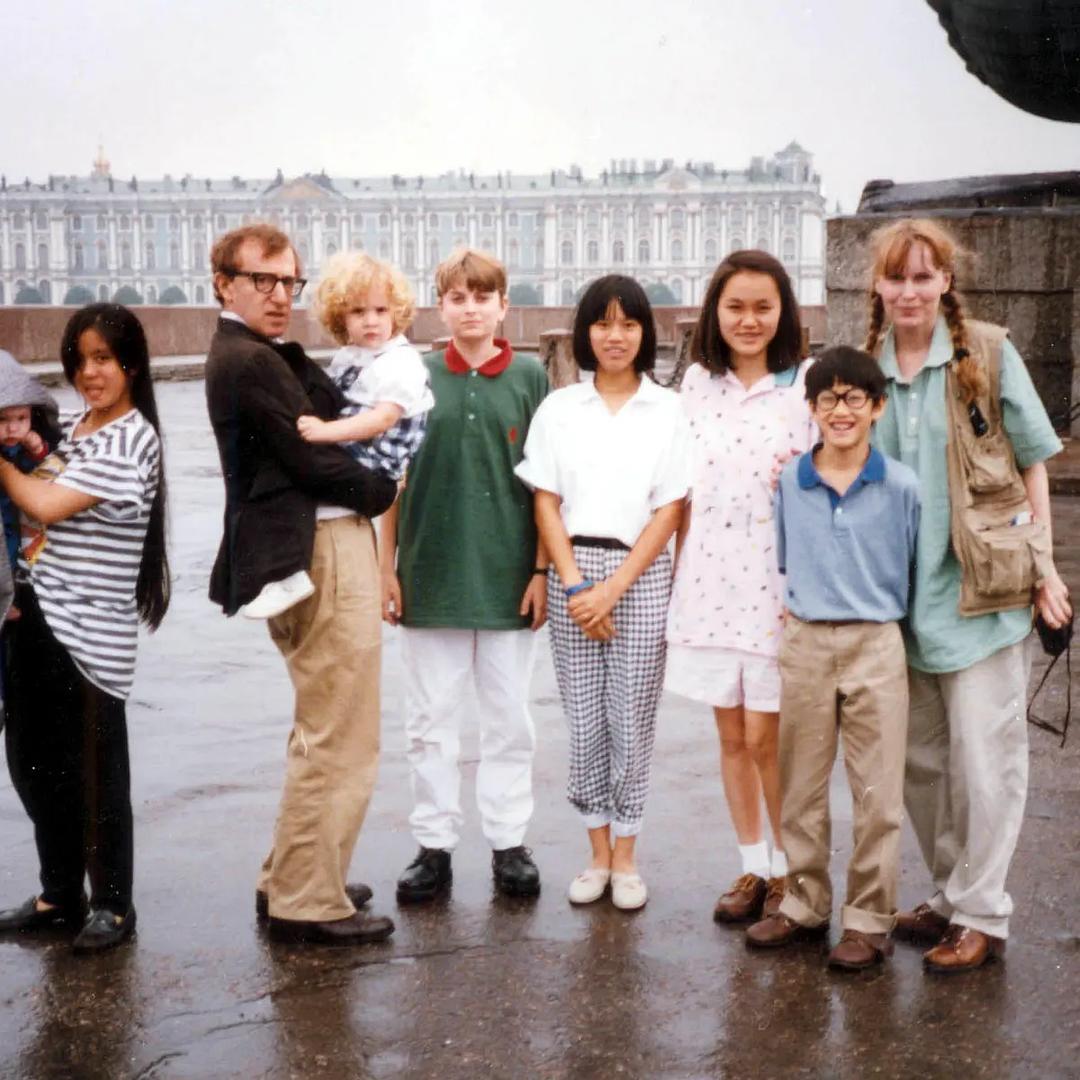
Mia另一位收养儿子Moses Farrow回忆:
“It was important to my mother to project to the world a picture of a happy blended household of both biological and adopted children, but this was far from the truth. I’m sure my mother had good intentions in adopting children with disabilities from the direst of circumstances, but the reality inside our walls was very different. It pains me to recall instances in which I witnessed siblings, some blind or physically disabled, dragged down a flight of stairs to be thrown into a bedroom or a closet, then having the door locked from the outside. She even shut my brother Thaddeus, paraplegic from polio, in an outdoor shed overnight as punishment for a minor transgression.
Soon-Yi was her most frequent scapegoat. My sister had an independent streak and, of all of us, was the least intimidated by Mia. When pushed, she would call our mother out on her behavior and ugly arguments would ensue. When Soon-Yi was young, Mia once threw a large porcelain centerpiece at her head. Luckily it missed, but the shattered pieces hit her legs. Years later, Mia beat her with a telephone receiver. Soon-Yi’s made it clear that her desire was simply to be left alone, which increasingly became the case. Even if her relationship with Woody was unconventional, it allowed her to escape. Others weren’t so lucky.
Most media sources claim my sister Tam died of “heart failure” at the age of 21. In fact, Tam struggled with depression for much of her life, a situation exacerbated by my mother refusing to get her help, insisting that Tam was just “moody.” One afternoon in 2000, after one final fight with Mia, which ended with my mother leaving the house, Tam committed suicide by overdosing on pills. My mother would tell others that the drug overdose was accidental, saying that Tam, who was blind, didn’t know which pills she was taking. But Tam had both an ironclad memory and sense of spatial recognition. And, of course, blindness didn’t impair her ability to count.
The details of Tam’s overdose and the fight with Mia that precipitated it were relayed directly to me by my brother Thaddeus, a first-hand witness. Tragically, he is no longer able to confirm this account. Just two years ago, Thaddeus also committed suicide by shooting himself in his car, less than 10 minutes from my mother’s house.
My sister Lark was another fatality. She wound up on a path of self-destruction, struggled with addiction, and eventually died in poverty from AIDS-related causes in 2008 at age 35.
For all of us, life under my mother’s roof was impossible if you didn’t do exactly what you were told, no matter how questionable the demand.” - (http://mosesfarrow.blogspot.com/2018/05/a-son-speaks-out-by-moses-farrow.html)
舆论告诉我们Woody Allen是可怕的恋童癖,强奸犯,我们要抵制所有他的电影,要声讨所有仍然愿意跟他合作的演员,更要用这种大潮淹没所有仍然为Woody Allen出来辩护的人。这是仿佛可以代替法院的作用来给人判罪的力量。有污点的人,不配拥有做人的基本权利,有污点的艺术家,更不配再有创作的自由。我想想那句老生常谈的“ Separating art from artist" 至今在我心里仍然难以找到一种简单的准则...
作为女性,我为自己生活的时代感到幸运。因为这个时代给了女性群体更多的空间和权利,因此我有了相比上几代女性更多的生活选择。然而同时当看到某种政治正确大潮正在席卷而来要消灭所有不同的声音时,我不禁觉得背脊发凉,这又会不会是一个时代悲歌的前奏?
Woody Allen有罪与否,我在看了很多从双方角度的资料后仍然没法给自己一个定论。我只知道,从小到大在我心里那些搂着跟自己子女年龄相仿小女友的中老年男人,难免都散发着油腻和恶臭。但他的私生活并不会让我觉得《蓝色茉莉》或者《午夜巴塞罗那》这些电影变成了劣质的作品。Woody Allen是我从少年时代一直喜欢的导演,如果未来他仍然有机会拍电影,我想我还是会去看。倘若有天有从Woody Allen没有犯罪角度制作的记录片/宣传片,我也会抱着尽量客观的心态来看。
而那些因为种种原因被原生家庭抛弃又再被Mia Farrow领养的亚裔孩子们,就像小猫小狗一样被领养,被嫌弃,然后再在媒体上被渲染成那些白人养父母的善心产物。有多少主流媒体,有多少人在意过他们的声音,他们的呼救呢?看着电影里把Mia像天使老母亲一样描绘,我不由地感觉不适。如果说记录电影带着某种社会责任,我想那应该是作品核心努力把持的一杆秤。很遗憾,看完这部由HBO精致制作的“纪录片”,我恍然大悟自己其实看的是宣传片。2009年,Mia的亲弟弟饮弹自尽。2013年,Mia的哥哥因为性侵两名男童入狱十年 (https://www.nbcwashington.com/news/local/mia-farrows-brother-to-be-sentenced-for-sex-abuse/1957532/)。我想,不幸的童年就像是一种瘟疫在一个家族里生根蔓延,而那些被领养的孩子存在在这个家庭的最底层生命像野草一样消亡,无人问津。看罢,我唯一的结论是,儿童领养,特别是发达国家对非发达国家儿童的领养,应该有非常严格的审核方式,毕竟不是所有人都有资质为人父母。
说到HBO的记录剧集,我最后不得不推荐《纽约灾星》(https://movie.douban.com/subject/26292143/)
下载电影就来比兔TV,本站资源均为网络免费资源搜索机器人自动搜索的结果,本站只提供最新电影下载,并不存放任何资源。
所有视频版权归原权利人,将于24小时内删除!我们强烈建议所有影视爱好者购买正版音像制品!
Copyright © 2025 比兔TV


